
Yoga Is About Exploring the Limit, Not Pushing the Limit
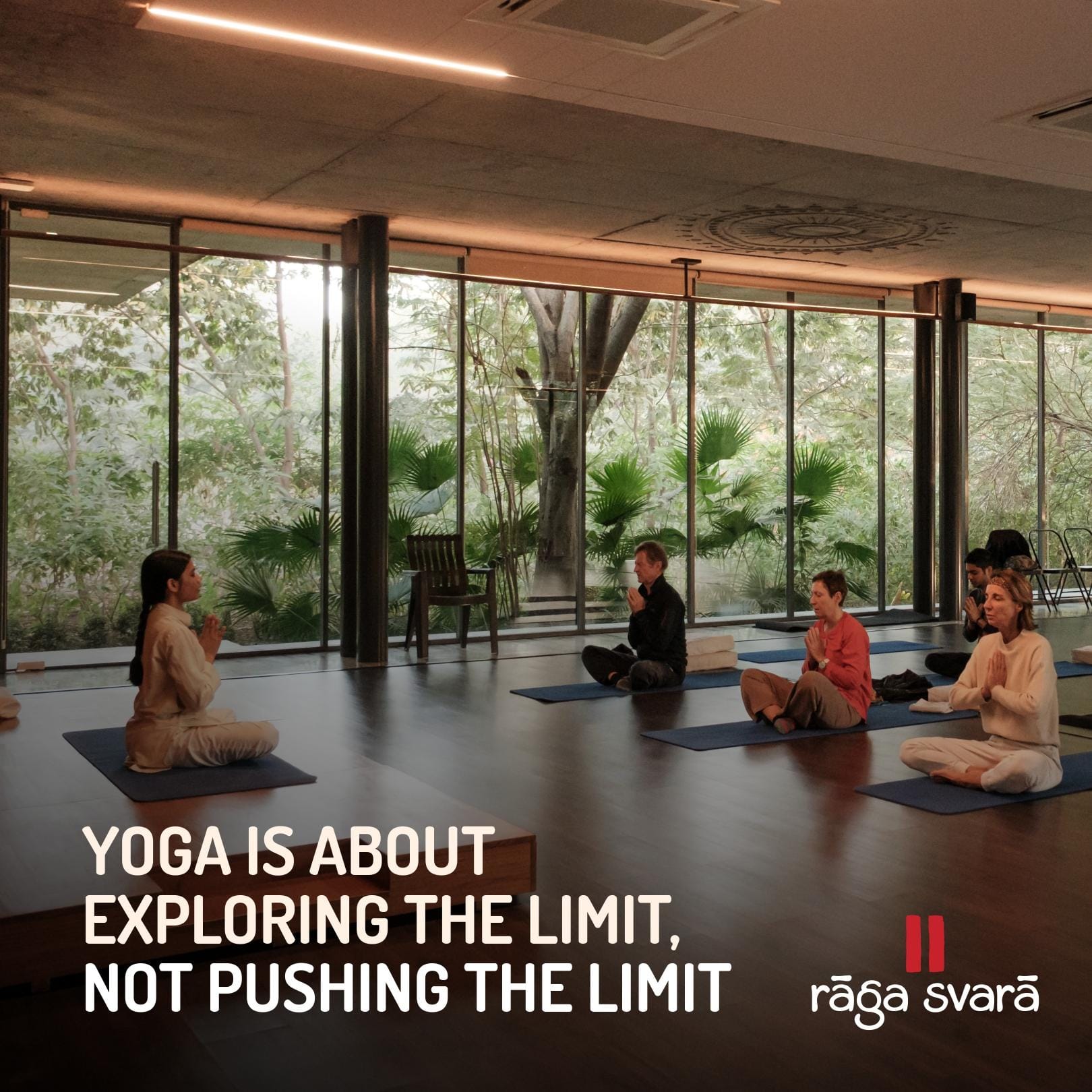
Today, there are different styles of yoga that are practiced: Ashtanga, Vinyasa, Hatha, Yin, Restorative, Power Yoga and many others. While they may differ in pace, sequencing, intensity and the way postures are approached, they all trace their roots back to Traditional Hatha Yoga. Practice may look different from one style to another but the definition of asana remains the same, Sthira Sukham Asanam (PYS 2.46), meaning a posture that is steady and comfortable. Beneath the differences in style remains a fundamental principle, awareness. Regardless of the style or method we practice, yoga encourages us to cultivate steadiness, comfort and presence within the experience.
In today’s world, Yoga is frequently measured by how deep we can stretch, how advanced our postures are or how many challenging transitions we can perform. Strength, mobility, flexibility and endurance are seen and celebrated as signs of progress and validation. While these qualities have value, they are still the by-products of practice rather than the purpose of practice. The purpose of asana is not the posture itself. The postures are a tool. A tool for developing awareness, steadiness and presence. Whether we are practicing Ashtanga, Vinyasa, Hatha, Yin or Restorative Yoga, the essential question remains the same, “Can I remain aware while meeting my limit, my current physical and mental capacity, while bending or moving dynamically or even in the simplest movement or posture?”
There is an important difference between exploring our limits and pushing our limits. Pushing the limit comes from a mindset of achievement. It sounds like, “I need to bend more, twist hard. I should be able to do more. I must achieve this posture.” The attention becomes fixed on the destination and the body becomes something to conquer. Exploring the limit is different. It begins with accepting and respecting the body as it is, bringing an end to the inner conflict and outer struggle between the current capacity of the body and the pursuit of the ideal posture or pace of a sequence during the practice. This way the practice becomes more effective, fostering holistic growth, balance and inner and outer expansion, because strength and flexibility are not just physical attributes, they are also influenced by our mental and emotional states. It sounds like, “This is where I am today. What happens if I stay present here? Can I observe this edge without forcing it?” In this approach, growth is not abandoned. We still become stronger. We still become more mobile. We still expand our capacity. But we do it gradually and patiently. Expansion becomes the consequence of practice rather than the objective that drives it.
Yoga is both mental and physical work. It is not only about the flexibility of the body but also the flexibility of the mind. The body may have limitations today. The mind’s role is not to fight those limitations but to understand them, accept them and work with them skillfully but gently. Many people can place their bodies into impressive shapes. But if the mind remains rigid, impatient, frustrated and constantly seeking more, then something essential is missing. Mental rigidity combined with physical flexibility and strength is not yoga, it is gymnastics or physical workout. Yoga asks for something deeper. It asks us to be present with the body exactly as it is today. It asks us to observe the edge without forcing it. It asks us to remain aware with every movement and every breath and to observe the posture without immediately trying to change it. A person can have a very flexible body and still struggle to slow down, to be present or to let go of the constant urge to achieve perfection when the body is not ready. And a person can have many physical limitations and still have awareness and steadiness in practice. The achievement in yoga is not mastering a posture or completing a difficult sequence. The achievement is finding steadiness within the posture. It is attaining awareness within movement. It is maintaining a relationship with the breath throughout the practice.
In many other forms of exercise, the primary goal is performance, strength, speed or achieving a measurable outcome. Yoga can certainly develop all of those qualities but it puts forward some important questions, “how am I relating to myself while I do this? Am I present with the movement? Am I aware of my breath? Am I listening to the body or am I just trying to make it do more?” This is where the distinction between yoga and other forms of physical exercise becomes clear. Not in the style of the practice or exercise, but in the quality of attention we bring to it. Through the body, we learn about the mind. Through movement, we learn stillness and acceptance.
Sometimes we identify with a particular style very strongly and it becomes a mental knot that prevents us from experiencing other approaches. No experience, be it dynamic or restorative, is right or wrong, but they reveal something about the relationship between the body and the mind. And they are there to be practiced according to the requirements of the body.
In many ways, this mirrors the larger human experience. All our lives, we are taught to become more. More successful. More productive. More accomplished. We are constantly chasing the next version of ourselves. Yoga offers an opportunity to pause that pursuit. And we learn to accept who we are and where we are in this moment. Not as an act of quitting but as the foundation for genuine growth. Growth does not happen because we reject our limitations. Growth happens because we acknowledge them honestly and patiently work with them. And this approach also reduces the risk of injury and mishaps during the practice. When we are constantly trying to push beyond what the body is ready for, we stop listening. But when we explore our limits with awareness, the body gradually becomes more capable over time.
So, no matter what style you prefer, remember to ask yourself, are you able to relax the body while you are in the posture? Are you able to move into the posture with steadiness? Because the goal of the yoga practice is not to satisfy the demands of the mind or to seek validation through a challenging practice but to attain harmony between mind, body, and breath during practice and in life beyond the mat.
- Khushi S, Yoga, Yoga teacher at Raga Svara